August 11, 2026
Durable Stamped Metal Parts for Home Appliances and Industrial Control System Equipment
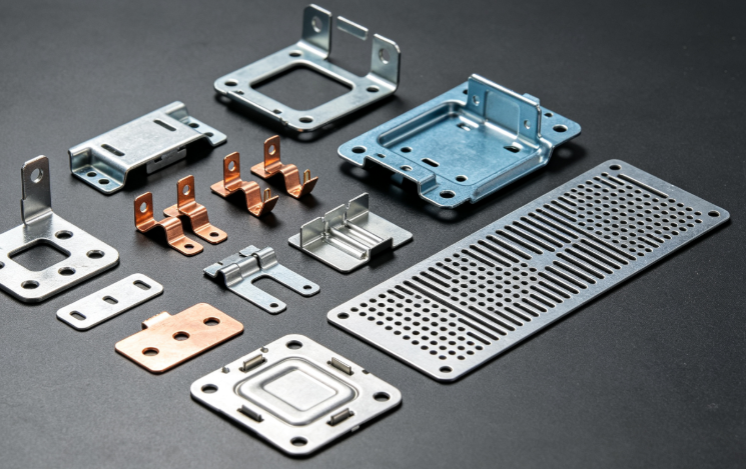
Table of Contents
1. Introduction
2. Main Product Range of Stamped Metal Parts
3. Core Performance Requirements for Home Appliance & Industrial Control Applications
4. Key Production Processes Ensuring Durability and Dimensional Consistency
5. Common Operational Risks Caused by Low-grade Stamped Components
6. Data Comparison: General Stamped Parts VS Durable Precision Stamped Metal Components
7. Strict Whole-process Quality Control System
8. Typical Industrial Application Scenarios
9. Customized Stamping Development Service
10. Conclusion
11. Industry FAQ
1. Introduction
Home appliances and industrial control equipment operate under continuous vibration, temperature cycling, humidity and electrical load fluctuations. Ordinary low-precision stamped metal parts easily suffer loose assembly, fatigue cracking, poor contact and surface corrosion after long-term operation, triggering equipment failure and safety hazards.
Durable stamped metal parts are manufactured via progressive die stamping, precise forming and post-process finishing. Stable control of dimensional tolerance, forming integrity, burr removal and surface treatment delivers consistent mechanical strength, anti-fatigue performance and corrosion resistance. These components serve as structural supports, electrical conductive terminals, shielding assemblies and mounting brackets, satisfying the long-service-life demands of refrigeration appliances, washing machines, frequency conversion cabinets, PLC control boxes and industrial power distribution equipment.
This article analyzes material selection, stamping process control and engineering selection standards, providing reliable technical reference for home appliance manufacturers, industrial automation enterprises and hardware component purchasers.
Core Industry Keywords: stamped metal parts, sheet metal stamping components, home appliance hardware, industrial control stamped brackets, conductive stamping terminals, electromagnetic shielding stamping parts, progressive die stamping, durable formed metal components, precision blanking and bending parts, electrical equipment metal stamping
2. Main Product Range of Stamped Metal Parts
2.1 Structural Stamped Brackets & Mounting Frames
Bent and formed support frames, fixed mounting brackets, chassis reinforcing plates. Widely used for internal support of refrigerators, air conditioners, frequency converter cabinets and control housings.
2.2 Electrical Conductive Stamped Components
Copper and phosphor bronze spring terminals, busbar connectors, contact shrapnel, grounding plates. Guarantee stable electrical contact under repeated vibration and temperature variation.
2.3 Electromagnetic Shielding Stamped Parts
Box-shaped shielding covers, partition shielding sheets, EMI shielding frames for industrial control circuit boards and power modules to suppress electromagnetic interference.
2.4 Decorative & Functional Shell Stamped Parts
Control panel faceplates, equipment outer cover components, heat dissipation punched sheets, door hinge assemblies for household appliances.
2.5 Custom Special-shaped Stamped Components
Non-standard asymmetrical formed parts developed according to customer drawings, including multi-station integrated blanking, bending, embossing and piercing structures.
Optional Material & Surface Treatment
Cold rolled steel (SPCC), galvanized steel, stainless steel, copper alloy, aluminum alloy; available processes: phosphating, powder coating, electroplating, passivation, tin plating, oil-free anti-rust surface.
3. Core Performance Requirements for Home Appliance & Industrial Control Applications
3.1 Dimensional Repeatability
Tight tolerance for bending, hole position and outline dimension to avoid assembly offset on automated production lines.
3.2 Anti-fatigue Mechanical Performance
Resist long-term alternating vibration without cracking or permanent deformation; critical for compressor supports and switch contact shrapnel.
3.3 Clean Edge Quality
Controlled burr height. Sharp residual burrs risk wire scratching, short circuit and assembly injury.
3.4 Surface Corrosion Resistance
Suitable surface treatment prevents rust under humid indoor and factory workshop environments; maintain stable grounding and conductive performance.
3.5 Consistent Elasticity for Contact Components
Copper alloy stamped terminals maintain stable contact pressure after thousands of switch cycles to avoid overheating caused by contact resistance drift.
4. Key Production Processes Ensuring Durability and Dimensional Consistency
4.1 Raw Material Incoming Inspection
Verify sheet thickness, material tensile strength, hardness and surface flatness. Reject coils with thickness fluctuation and surface defects that cause forming distortion.
4.2 Progressive Die Precision Stamping
Multi-station integrated progressive dies complete blanking, bending, piercing and embossing in one continuous stroke. Stabilize die clearance to control burr size.
4.3 Springback Compensation Design
Pre-calculate elastic springback during bending forming to guarantee finished part geometry within tolerance after forming.
4.4 Deburring & Surface Finishing
Tumbling, grinding or online edge trimming to eliminate sharp burrs; surface cleaning removes stamping oil and metal debris.
4.5 Targeted Surface Treatment
Select galvanization, tinning or coating according to application environment to achieve matched anti-corrosion performance.
4.6 Batch Sampling Performance Testing
Dimensional measurement, bending fatigue test, hardness detection and salt spray corrosion test for each production lot.
5. Common Operational Risks Caused by Low-grade Stamped Components
5.1 Dimensional Drift and Poor Assembly Consistency
Unstable die and process control lead to variable part sizes; automated assembly jams and bolt hole misalignment occur frequently.
5.2 Excessive Edge Burrs
Sharp burrs scratch wire insulation, trigger hidden short-circuit risks inside electrical control cabinets.
5.3 Fatigue Cracking Under Long-term Vibration
Insufficient forming precision and material ductility; brackets crack after appliance multi-year operation, leading to component displacement.
5.4 Rapid Surface Rusting
Inadequate raw material or surface treatment causes rust, weakening grounding performance and damaging product appearance.
5.5 Contact Elasticity Decay
Poor-quality phosphor bronze shrapnel loses elasticity quickly; contact resistance rises, causing local overheating in power circuits.
6. Data Comparison: General Stamped Parts VS Durable Precision Stamped Metal Components
The table below collects measured data from home appliance and industrial control equipment manufacturing projects.
表格
Inspection Item | Ordinary General Stamped Parts | Durable Precision Stamped Metal Components | Equipment Manufacturing Requirement |
Dimensional repeat tolerance | ±0.12 ~ ±0.25 mm | ≤±0.08 mm | Stable automated assembly |
Maximum residual burr height | 0.08 ~ 0.15 mm | ≤0.05 mm | Avoid wire scratching & short circuit risk |
Fatigue failure cycle (bracket vibration test) | 80,000 ~ 150,000 cycles | ≥300,000 cycles | Long service life for household appliances |
Salt spray resistance duration | 24 ~ 72 hours | 120 ~ 500 hours (depends on coating) | Anti-corrosion in humid environment |
Contact resistance fluctuation of copper terminals | Obvious after cycling | Minor fluctuation | Prevent electrical overheating |
Assembly-related reject rate | 3.4% | 0.9% | Reduce downstream production loss |
Data clearly shows durable precision stamped metal parts effectively lower equipment failure risks and improve long-term operational stability for home appliance and industrial control manufacturers.
7. Strict Whole-process Quality Control System
7.1 Sheet Raw Material QC
Material certificate verification, thickness and surface defect sampling inspection before production.
7.2 Progressive Die & Stamping Process Patrol Inspection
Continuous sampling of outline dimension, bending angle and burr status during mass production. Regular die maintenance to prevent wear-induced quality drift.
7.3 Post-forming Deburr & Surface Check
Screen for scratches, dents and residual metal particles before surface treatment.
7.4 Surface Treatment Effect Verification
Coating thickness, adhesion and salt spray testing according to component requirements.
7.5 Finished Product Sampling Test
Dimension audit, fatigue simulation test and appearance inspection before packaging.
7.6 Batch Traceability
Raw material batch, stamping parameters and test records archived for component lifecycle tracking.
8. Typical Industrial Application Scenarios
Home Appliance Industry
· Refrigerator, air conditioner internal support brackets and fixed plates
· Washing machine structural frames, motor mounting supports
· Kitchen appliance control panel parts, door hinge assemblies
· Household appliance conductive terminals, grounding sheets and shielding components
Industrial Control Equipment Industry
· PLC cabinet, frequency converter internal mounting brackets
· Power distribution box shielding covers, busbar connecting terminals
· Automation equipment control box housing and reinforcing plates
· Sensor fixed supports, industrial switch elastic contact components
9. Customized Stamping Development Service
We develop special-shaped stamped parts according to customer 2D/3D drawings. Support material selection, stamping process simulation and surface treatment scheme optimization.
From prototype trial stamping to mass progressive die production, we realize flexible transition from small-batch pilot orders to large-volume manufacturing. All products can provide material test certificates and batch inspection reports for overseas tender and certification documentation. Our engineering team evaluates forming feasibility and suggests structural optimization to reduce stamping difficulty and production cost.
10. Conclusion
Safe and stable operation of home appliances and industrial control equipment relies on reliable stamped metal components. Low-grade general stamped parts bring hidden risks such as assembly deviation, fatigue cracking and electrical contact failure.
Durable stamped metal parts adopt standardized progressive die stamping, strict forming compensation and targeted surface finishing. Precise dimension control, clean edge quality, balanced mechanical performance and anti-corrosion capability meet multi-year continuous operation requirements of household and industrial electrical equipment.
Component purchasers should prioritize stamping suppliers with mature die design, fatigue performance testing and full surface treatment capacity, rather than simply comparing unit material prices.
11. Industry FAQ
Q1: What is the difference between progressive die stamping and single-station stamping? A: Progressive dies complete multiple forming steps in one continuous feeding stroke, delivering higher consistency and mass-production efficiency; single-station stamping is suitable for simple low-volume parts with lower dimensional repeatability.
Q2: Can stamped contact terminals be customized for different current ratings? A: Yes. We adjust copper alloy grade, shrapnel thickness and bending geometry to control contact pressure and resistance for specified current loads.
Q3: How to choose surface treatment for indoor appliance and industrial control components? A: Galvanized or phosphated cold rolled steel for general structural brackets; tin-plated copper for conductive terminals; stainless steel for high-humidity corrosive environments.
Q4: Is prototype trial stamping available before mass production? A: Yes. We can produce small sample batches using simple tooling to verify forming quality before progressive die development.
Q5: How to control springback during bending stamping? A: Adopt springback compensation on die structure, optimize forming pressure and holding time according to material thickness and mechanical properties.